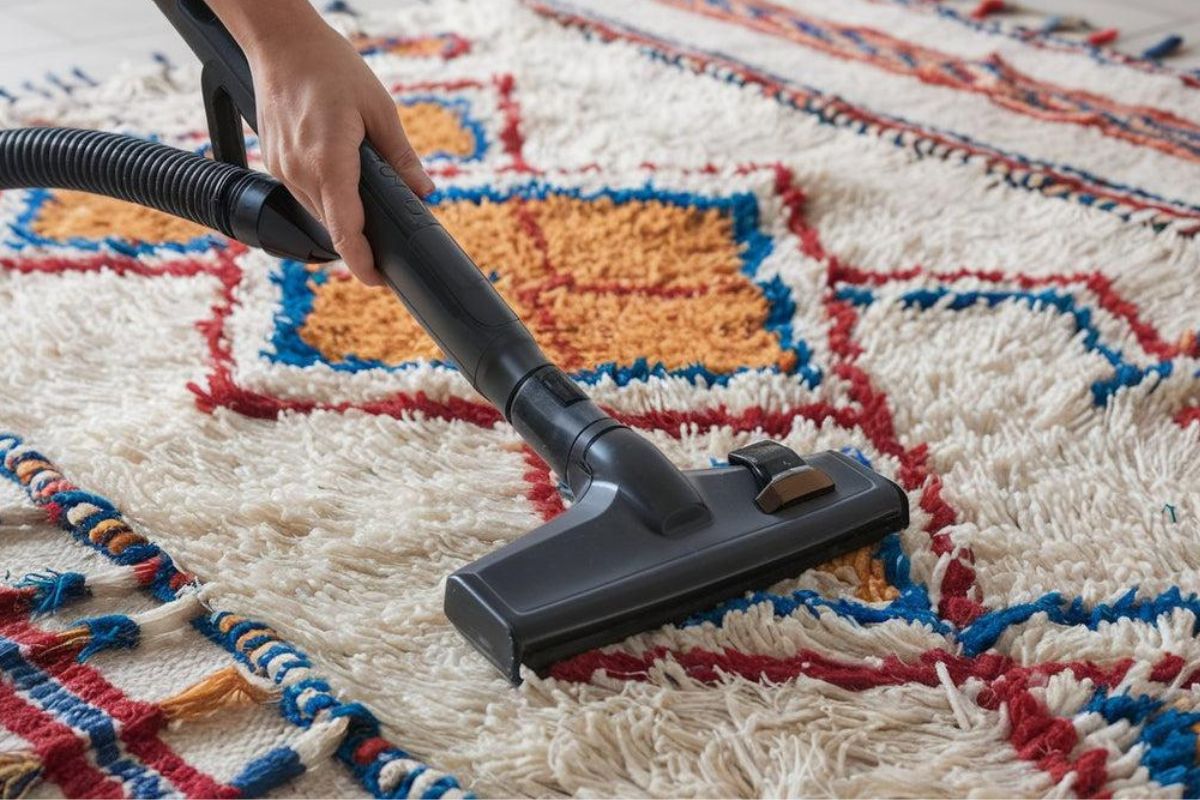
Looking after a hand-knotted wool rug is five habits: vacuum it properly, deal with spills in the first few minutes, rotate it so light and traffic land evenly, check for moths a few times a year, and keep the wrong products away from it. That last one carries most of the weight, because most of the serious damage done to wool rugs at home is done by owners trying to clean them. Wool is a protein fibre. The things that work on synthetic carpet felt it, strip it, or bleach it permanently.
Why wool needs different treatment from everything else on your floor
Wool is protein, closer to hair than to plastic. That single fact explains almost every rule on this page.
Professional rug cleaning sources are consistent about the constraints: wool wants pH-neutral treatment, with professional formulations described in the range of about 5.5 to 8.0. Push it alkaline and the fibre felts and shrinks, the lanolin that protects it is stripped, and the dyes become unstable. Add heat and all of that accelerates. Oxygen bleach, the active ingredient in most "oxy" spot cleaners, lightens wool permanently. Enzyme cleaners are designed to break down protein, which is exactly what the rug is made of.
The other half of the picture is lanolin, the natural grease still present in good wool. It repels dirt and liquid, which is why a spill sits on the surface for a short while before soaking in, and why a wool rug in ordinary use stays cleaner than people expect. Strip the lanolin and you lose that.
A Moroccan hand-knotted rug adds one more consideration: it is a one-off object. There is no replacement, which raises the cost of every experiment.
Routine one: vacuuming, done correctly
Vacuuming is the most valuable thing you do, and the most common way rugs get damaged.
The rule that matters: turn the rotating brush roll or beater bar off, or use a bare-floor or upholstery setting. A spinning brush pulls and fuzzes a hand-knotted pile and can tear the fringe out at the ends, which is the one genuinely irreversible thing on this list. Vacuum with the direction of the pile, without forcing the machine down into it, and keep it off the fringe entirely.
Do the parts under and behind furniture rather than only the open floor. Undisturbed areas are where carpet moth larvae live, so vacuuming there is pest control as much as cleaning. Vacuuming a wool pile rug without damaging it covers what to do if your machine's brush cannot be switched off, which is most machines.
Routine two: dealing with a spill
Speed matters more than technique. Lanolin buys you a short window before liquid absorbs, and using it is most of the job.
Blot, do not rub, working from the outside of the spill inward so you do not spread it. Use plain water sparingly if you use anything, and never saturate the pile. If you use a product, it must state that it is safe for wool, be used exactly as its manufacturer directs, and be tested on a hidden corner first.
Then stop earlier than you want to. Escalating through stronger products is how a small mark becomes a permanent pale patch. Spills on wool: what to do in the first five minutes is the page to have open when it happens.
Routine three: rotation, placement and light
Sunlight fades wool, unevenly, and the part by the window goes first. Rotate the rug end to end a couple of times a year so light and foot traffic land differently, and it ages evenly instead of developing a bright half and a worn path.
Placement is worth thinking about once rather than regretting later. Direct sustained sun, a damp room, and the strip of floor where a door sweeps are all avoidable problems. Keep wool out of persistently damp spaces.
Routine four: watching for moths
Carpet moths are the one problem here that gets worse while you do nothing. The damage is done by larvae feeding on the wool, not by the adult moths you occasionally see, and they favour dark, undisturbed places: under furniture, along edges, the underside of a rug that never moves.
Look two or three times a year. Lift a corner, look at the base of the pile along the edges and under anything heavy, and check for fine silk webbing, small pale tubular cases, and sandy grit. Carpet moths: how to tell if you have an active infestation covers exactly what those signs look like and how to tell current damage from old damage.
What never goes on wool
Categories rather than brands, because the category is what matters.
- Oxygen bleach, including "oxy" spot cleaners. It lightens wool and the pale patch does not come back.
- Chlorine bleach. Worse.
- Enzyme cleaners. They break down protein, and the rug is protein.
- High-alkaline all-purpose household cleaners, which is most of what is under a kitchen sink. Alkalinity felts wool, strips lanolin and destabilises dyes.
- Hot water and heat, including steam, which compounds all of the above.
- Soaking of any kind. Wool holds water, and a rug that stays damp develops mildew and odour that are harder to fix than the original problem.
Never mix cleaning products. And whatever you do use, follow its own manufacturer's instructions and test it somewhere hidden first. Cleaning products that quietly destroy wool sorts the cupboard properly, and explains why this damage is invisible on the day and obvious a week later.
When it is genuinely a professional's job
Not as often as a cleaning company's website suggests, and not as rarely as a confident weekend suggests.
Do it yourself: routine vacuuming, prompt blotting of ordinary spills, rotation, airing a rug outdoors on a dry day.
Call someone: a full wash of anything old, valuable or naturally dyed; any spill that has set; pet accidents that have soaked into the foundation; a colour run; a confirmed moth infestation; and anything where the honest answer to "can I get this fully dry, fast and flat" is no. Drying is the part that goes wrong at home. Washing a wool rug at home, or not is built around exactly that question.
When you do call, use a rug cleaning specialist rather than a general carpet cleaning service, and tell them the rug is hand-knotted wool and whether the dyes have ever run.
If you are still choosing a rug rather than caring for one, how to buy a Moroccan rug without getting taken and the complete guide to Moroccan rug styles are the places to start. And if your new rug is leaving fluff everywhere, that is usually normal: why your new wool rug sheds.
FAQ
How often should I vacuum a wool rug?
Roughly weekly, and more often in a traffic path, with the rotating brush switched off and the machine kept off the fringe. Include the areas under furniture, because that is where moth larvae live.
Can I use a steam cleaner on a wool rug?
No. Heat and saturation both damage wool, causing felting, shrinkage and dye movement, and a dense pile that stays damp develops odour and mildew.
What is the worst thing to use on a wool rug?
Oxygen bleach, sold as "oxy" spot cleaner. It bleaches wool permanently. High-alkaline household cleaners and enzyme cleaners are close behind.
How do I know if my rug has moths?
Look in dark, undisturbed places for fine silk webbing, pale tubular cases roughly 1 to 2 mm long at the base of the pile, and sandy grit near the edges. Adult moths flying around are a weaker signal than these.
Do I need professional cleaning, and how often?
Less often than cleaning companies suggest, and this guide will not quote an interval. Call a rug specialist for a full wash of anything old or naturally dyed, a set stain, a pet accident that reached the foundation, a colour run, or a confirmed moth infestation.
Leave a Reply